Getting to Sanand, Gujarat
Sanand's primary asset as a travel destination is its excellent accessibility. Located just 25 kilometres south-west of Ahmedabad — Gujarat's largest city and commercial capital — Sanand is connected to the broader transport network by good road infrastructure, making it one of the most conveniently reachable secondary towns in the state.
By Air
The nearest major airport to Sanand is Sardar Vallabhbhai Patel International Airport (AMD) in Ahmedabad, which offers extensive domestic connections to all major Indian cities and direct international flights to destinations in the UAE, UK, USA, Singapore, and beyond. The airport is approximately 35–45 kilometres from Sanand, accessible in 50–70 minutes by road depending on traffic conditions.
Upon arrival at Ahmedabad Airport, the most efficient options for reaching Sanand are:
- Pre-booked taxi or cab service: App-based services (Ola, Uber) and local taxi operators serve the Ahmedabad–Sanand corridor. Expect to pay ₹400–700 for a one-way trip depending on vehicle type and traffic.
- Auto-rickshaw to Ahmedabad city + bus to Sanand: A more economical option for budget travellers. Take an auto from the airport to Ahmedabad's Geeta Mandir or Lal Darwaja bus stations, then connect to Sanand-bound Gujarat State Transport (GSRTC) buses or private minibuses.
- Rental car: Several car rental operators at the airport and in Ahmedabad city offer self-drive or chauffeur-driven vehicles. A rental car provides maximum flexibility for exploring Sanand and the wider region.
By Train
The nearest major railway station to Sanand is Ahmedabad Junction (ADI), one of the busiest railway stations in western India with connections to virtually every part of India. From Ahmedabad Junction, Sanand can be reached by local bus, taxi, or auto-rickshaw.
A smaller railway halt, Sanand Railway Station, exists on a branch line connecting the town to the Ahmedabad rail network. However, train services on this branch are infrequent and the station infrastructure is basic. Most travellers find it more practical to arrive by train at Ahmedabad Junction and then travel onward to Sanand by road.
Key trains connecting Ahmedabad to major Indian cities include the Rajdhani Express (Mumbai–Delhi), the Shatabdi Express (Ahmedabad–Mumbai), and numerous other express and superfast services. Booking in advance through IRCTC (www.irctc.co.in) or authorised travel agents is strongly recommended, especially during peak travel seasons and festival periods.
By Road
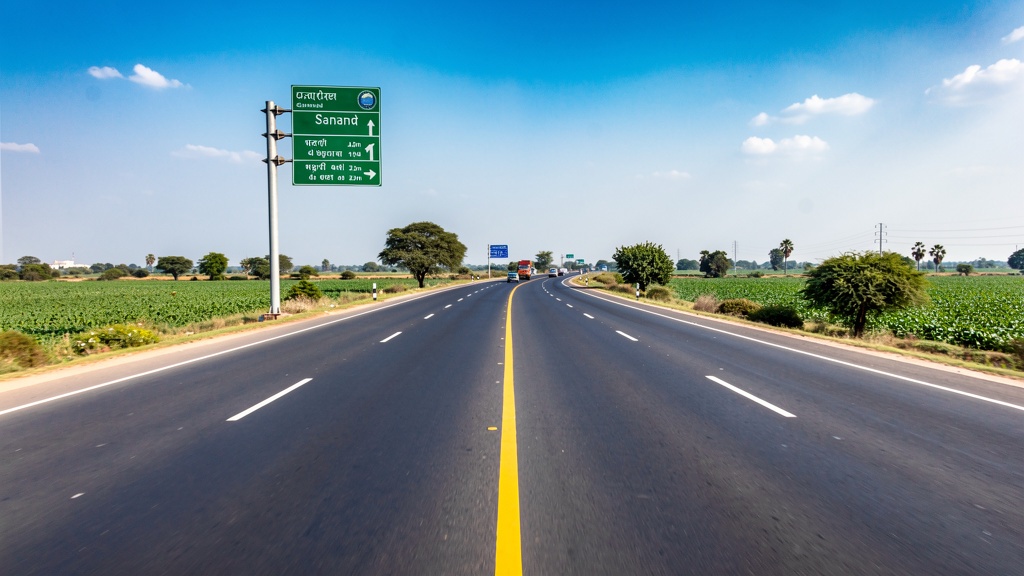
Road travel is by far the most flexible and popular option for reaching Sanand, and the road network serving the town is among the best in Gujarat. The primary road connection is:
- NH-947 / SH-17: The main highway corridor connecting Sanand to Ahmedabad, typically a 40–55 minute drive. This well-maintained four-lane road handles significant industrial traffic from the Sanand Special Investment Region.
- GSRTC Buses: The Gujarat State Road Transport Corporation operates regular bus services from Ahmedabad to Sanand, departing from Geeta Mandir and Lal Darwaja bus stations. Journey time is approximately 1–1.5 hours including stops. Buses are affordable (₹25–40) but can be crowded during peak hours.
- Private Operators: Several private minibus and shared jeep operators run on the Ahmedabad–Sanand route, providing a faster (though more crowded) alternative to GSRTC services.
- Self-Drive: For visitors already in Ahmedabad, driving to Sanand is straightforward and recommended for those wishing to explore the surrounding taluka villages. The route via SH-17 is well-signposted and the road is in good condition.
Local Transport within Sanand
Within Sanand town, the primary modes of local transport are auto-rickshaws and e-rickshaws (battery-powered three-wheelers), which are plentiful and affordable. Negotiate the fare before boarding — a typical town journey should cost ₹20–50. For exploring the wider taluka, auto-rickshaws can be hired for the day at negotiated rates (typically ₹400–600), or bicycles can be rented from some guesthouses and cycle shops.
Best Time to Visit Sanand
Understanding Sanand's seasonal rhythms is essential for planning a visit that matches your interests and comfort preferences. The town experiences the classic semi-arid climate of central Gujarat, with three distinct seasons each offering a different character and set of experiences.
October to February — Peak Season (Highly Recommended)
The winter months are unequivocally the best time to visit Sanand for most travellers. The intense summer heat has dissipated, the monsoon rains have transformed the landscape into fresh green, and the festival calendar is at its richest. Daytime temperatures range from a comfortable 20–28°C, while nights cool pleasantly to 10–15°C, making outdoor activities and sightseeing enjoyable throughout the day.
The cultural highlights of this period include:
- Navratri (September/October — dates vary by Hindu calendar): The nine-night Garba festival, Sanand's most spectacular cultural event. Book accommodation well in advance.
- Diwali and Bestu Varas (October/November): The festival of lights and Gujarati New Year, accompanied by spectacular fireworks, illuminations, and sweet exchanges.
- Uttarayan (January 14): The kite festival — an all-day rooftop celebration with competitive kite-flying and traditional winter foods.
- Birdwatching at Nal Sarovar: The sanctuary's peak season for migratory birds coincides perfectly with the winter travel window.
March to June — Summer (Challenging but Possible)
Summer in Sanand is hot and dry, with temperatures regularly climbing above 40°C in April and May and occasionally reaching 44–45°C in May–June. Travel during this period requires careful acclimatisation, staying hydrated, and avoiding outdoor activities during midday hours (11 AM–4 PM).
The summer is not without its merits: hotels are typically cheaper, the town is less crowded, and the early morning hours before the heat builds can be delightful for temple visits and market exploration. The Holi festival (February–March) falls in the transitional period when temperatures are still manageable, making late February to mid-March a good compromise option for summer-season visitors.
July to September — Monsoon (Atmospheric but Wet)
The southwest monsoon arrives in Sanand typically in late June or early July, bringing relief from the summer heat and transforming the landscape. Rainfall is moderate by Gujarat standards (700–800mm annually), with most precipitation falling in July and August. Road travel can be disrupted during heavy rain events, and some rural areas may become inaccessible.
The monsoon offers a distinct aesthetic charm — the parched landscape erupts into brilliant green, waterbodies fill, and the air carries the distinctive petrichor of freshly wetted earth. Photography enthusiasts and nature lovers may find the monsoon season offers unique visual opportunities. The late-monsoon period (September) is particularly pleasant, when the rains ease, the landscape is still green, and temperatures have moderated to a comfortable 25–32°C before the dry winter sets in.
| Season | Months | Temperature Range | Conditions |
|---|---|---|---|
| Peak Winter | Oct – Feb | 10°C – 28°C | Ideal — cool, dry, festivals |
| Early Summer | Mar – Apr | 18°C – 38°C | Warm, less crowded, good value |
| Peak Summer | May – Jun | 28°C – 45°C | Very hot — early morning visits only |
| Monsoon | Jul – Sep | 24°C – 34°C | Wet, green landscape, some disruptions |
Accommodation in and Around Sanand
Sanand's accommodation landscape reflects its dual identity as an industrial hub and cultural destination. The town itself offers a range of guesthouses and budget hotels catering primarily to business travellers, while the nearby city of Ahmedabad provides a much wider selection of options across all price categories.
Staying in Sanand Town
Accommodation within Sanand is primarily in the budget-to-mid-range category. The town has several clean, functional guesthouses and lodges that serve the needs of visiting business professionals, pilgrims, and travellers. These properties typically offer air-conditioned rooms, attached bathrooms, Wi-Fi (of varying reliability), and simple room service or nearby restaurant options.
While specific hotel names and rates change, the general range for mid-budget accommodation in Sanand is ₹800–1,800 per night for a double room. During Navratri and other major festival periods, availability tightens considerably and prices may increase — book well in advance for peak festival dates.
The key advantages of staying in Sanand town include proximity to the temples and markets, the ability to experience the town's evening atmosphere (which is very different from the daytime bustle), and easy access to the early-morning markets and temple aartis that are among the most rewarding experiences the town offers.
Staying in Ahmedabad (Recommended for Comfort Seekers)
For travellers who prioritise accommodation comfort and a wider range of dining and entertainment options, staying in Ahmedabad and visiting Sanand as a day trip or half-day excursion is the preferred approach. Ahmedabad offers an extensive range of accommodation from international luxury brands (Hyatt, Radisson, Hilton Garden Inn, Courtyard by Marriott) to mid-range chains (Lemon Tree, ibis, Treebo) and excellent boutique heritage hotels in the UNESCO Old City area.
The drive from Ahmedabad to Sanand takes 40–55 minutes under normal traffic conditions, making a day trip entirely feasible. For festival visits, staying in Ahmedabad while commuting to Sanand for the Navratri events is common practice among both domestic and international visitors.
Industrial Township Accommodations
The industrial corridor near Sanand has generated a cluster of business-oriented hotels in the SH-17 corridor between Ahmedabad and Sanand. These typically offer modern facilities at corporate rates and are primarily aimed at business travellers associated with the automotive and manufacturing sector, but can also serve as comfortable bases for leisure visitors willing to sacrifice proximity to the town centre for better room quality.
Food & Dining in Sanand
If there is one experience that justifies a visit to Sanand more than any other, it may well be the food. Gujarat is widely regarded as having one of India's finest and most distinctive vegetarian cuisines, and Sanand's position as an authentic Gujarati town (rather than a tourist destination) means that the food here reflects genuine local tradition rather than modified tourist versions.
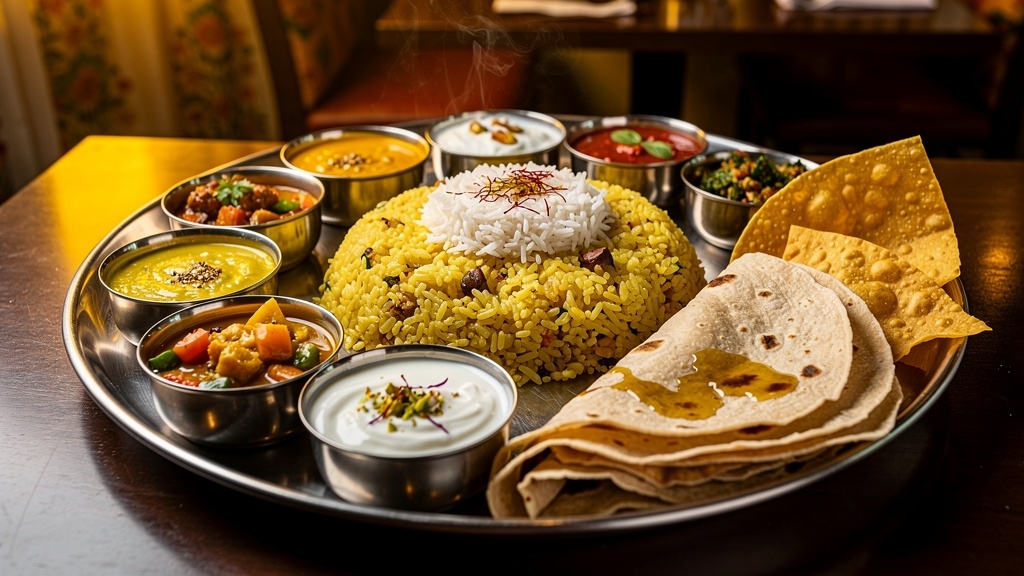
The Gujarati Thali — Your Essential Sanand Meal
The Gujarati thali is not merely a meal — it is a philosophical statement about generosity, variety, balance, and the sacred act of feeding. A traditional Sanand thali typically includes:
- Dal Dhokli: Wheat flour dumplings cooked in a rich, spiced lentil soup with notes of sweetness from jaggery and tartness from tamarind — a dish of remarkable complexity for its humble ingredients.
- Kadhi: A sweet-sour-tangy yoghurt-based soup tempered with mustard seeds, curry leaves, ginger, and asafoetida, served separately or poured over rice.
- Undhiyu: Available during winter months, this slow-cooked casserole of mixed vegetables (purple yam, raw banana, field beans, brinjal) with methi (fenugreek) dumplings is the crown jewel of Gujarati cuisine.
- Khaman Dhokla: Steamed fermented chickpea flour cake, soft and spongy, tempered with mustard seeds and garnished with fresh coriander and grated coconut.
- Shrikhand: Sweetened strained yoghurt flavoured with saffron, cardamom, and nutmeg, served as a dessert or accompaniment — one of India's great dairy preparations.
- Various Shaaks (vegetable curries): Seasonal vegetable preparations using techniques — sautéing, braising, steaming — that develop maximum flavour from minimal ingredients.
- Rotis and Puris: Wheat flour flatbreads, either dry-cooked on a griddle or deep-fried, served fresh and hot throughout the meal.
- Chunda: A sweet-hot raw mango preserve, essential as a condiment and balance to the other flavours.
- Papad: Crispy lentil crackers, always plural and always welcome.
Street Food and Snacks
Sanand's streets and markets offer an array of Gujarati street food that rivals anything available in Ahmedabad's famous food lanes. The dhaba stalls and street vendors serve:
- Fafda-Jalebi: The quintessential Gujarati breakfast combination — crispy gram flour strips (fafda) served with orange coiled sweet (jalebi) and fresh papaya chutney. This combination seems improbable but tastes extraordinary.
- Khakhra: Crispy thin wheat flatbreads seasoned with spices, sold by weight at market stalls and equally good with tea or as a snack.
- Gathiya: Deep-fried chickpea flour noodles in various thicknesses, served with chutneys, an indispensable Gujarati snack food.
- Bhajiya: Battered and fried vegetables, particularly popular during the monsoon season when a plate of hot bhajiya with green chutney is the definitive comfort food.
- Chaat: The Sanand version of North Indian street snacks — sev puri, ragda puri, and bhel puri — with a distinctly Gujarati sweet-sour flavour profile quite different from Mumbai or Delhi versions.
- Lassi and Chaas: Sweet lassi (yoghurt smoothie) and chaas (spiced buttermilk) are essential cooling beverages, particularly during the warmer months.
Dining Options in Sanand
Sanand's dining scene is anchored in authentic local tradition. The town has several established thali restaurants that serve the complete Gujarati meal at fixed prices (typically ₹120–250 per person), with unlimited refills of most items — a tradition of hospitality that is one of the most distinctive features of Gujarati food service culture.
Dhaba-style roadside eateries along the main roads serve quick, inexpensive Gujarati meals throughout the day, catering primarily to the industrial workforce that constitutes a significant part of the town's population. These humble establishments often serve food of extraordinary quality — freshly cooked, generously spiced, and representative of home cooking rather than restaurant adaptation.
The industrial corridor between Ahmedabad and Sanand also hosts several branded chain restaurants and fast food outlets catering to the corporate sector, providing familiar alternatives for visitors who find local food too challenging for their palate.
Dietary Considerations
Sanand is a thoroughly vegetarian town by tradition, and finding non-vegetarian food requires deliberate effort. Most restaurants, guesthouses, and eateries are fully vegetarian (sometimes strict Jain-vegetarian, excluding root vegetables like onion and garlic). This makes Sanand an excellent destination for vegetarian and vegan travellers who can enjoy the full depth of Gujarati cuisine without compromise.
The prevalence of dairy products in Gujarati cuisine — in shrikhand, kadhi, lassi, and various sweet preparations — means that strict vegans should enquire about dairy-free alternatives when ordering. Most local restaurants can accommodate this request with some advance notice.
Essential Travel Tips for Visiting Sanand
Language
Gujarati is the first language of Sanand and virtually all business, social, and religious interaction is conducted in Gujarati. Hindi is widely understood and spoken as a second language throughout the town and is the safest language for visitors without Gujarati skills. English is spoken by educated professionals and in business contexts but is not reliably available among market vendors, auto-rickshaw drivers, or temple staff. A few key Gujarati phrases (see below) will earn significant goodwill:
- Kem Cho? — How are you?
- Saru Che — I'm fine / That's good
- Aabhaar — Thank you
- Mafi Karjo — Excuse me / I'm sorry
- Kai Po Che! — My kite cut yours! (Use this on Uttarayan for instant friends)
Currency and Payments
India's Unified Payments Interface (UPI) system — accessible through apps like PhonePe, Google Pay, and Paytm — is widely accepted at Sanand's shops, restaurants, and even some market stalls. Cash (Indian Rupees) is still required at smaller vendors, auto-rickshaws, and rural markets. ATMs are available in Sanand town. Inform your bank before travel to ensure your international card functions at Indian ATMs without disruption.
Clothing and Cultural Sensitivity
Sanand is a traditionally conservative Gujarati town, and modest dress is both culturally appropriate and more comfortable in the climate. Lightweight, breathable cotton fabrics in full-length styles (covering shoulders and knees) are recommended for both men and women. Dedicated temple visits require covered heads for women in some shrines, and shoes must always be removed before entering temples, mosques, and many private homes.
Traditional Gujarati attire is deeply appreciated by local people and creates a warm social connection that enhances the travel experience. Women can purchase simple dupatta and salwar kameez sets at Sanand's markets for a modest sum; men can find a basic kurta-pyjama similarly affordably. Wearing traditional dress at Navratri events is particularly recommended.
Health and Medical Facilities
Sanand has basic medical facilities including a government hospital and several private clinics for minor health issues. For serious medical concerns, Ahmedabad's world-class private hospitals (including HCG, Apollo, and Sterling) are 25 km away. Carry a basic personal medical kit including electrolyte supplements (important for heat management), a reliable insect repellent, SPF 50 sunscreen, and any prescription medications in sufficient quantity.
Drinking water safety: While the municipal water supply in Sanand meets Indian regulatory standards, visitors are advised to drink bottled or filtered water to avoid gastrointestinal issues during the acclimatisation period. Most restaurants in the town use filtered water for cooking and beverages.
Photography Etiquette
Photography in Sanand's public spaces — markets, streets, festivals, temple exteriors — is generally unproblematic. Always ask permission before photographing individuals, particularly women. Temple interiors have varying photography policies; always ask the attendants before raising your camera. During Navratri, photography of the dance is warmly welcomed and reciprocated with great enthusiasm by local participants.
Safety
Sanand is a very safe destination for tourists. The town has a low crime rate, and the local community is characteristically hospitable and helpful to visitors. Standard common-sense precautions — keeping valuables secure, staying aware in crowded market environments, confirming auto-rickshaw fares before boarding — are all that is required. Solo travellers, including solo women travellers, have reported positive experiences in Sanand.
Connectivity
Mobile coverage in Sanand is good for all major Indian telecom operators (Jio, Airtel, Vi). 4G data is available throughout the town and on the main road corridors. Wi-Fi is available at most guesthouses and hotels, though speeds vary. International visitors should arrange an Indian SIM card at the airport or in Ahmedabad before arriving in Sanand — this ensures reliable navigation, communication, and access to maps throughout the trip.
Sample Sanand Itineraries
Half-Day Sanand Highlights (from Ahmedabad)
This compact itinerary suits visitors with limited time who want to experience the essential flavour of Sanand.
- 08:00 — Depart Ahmedabad by taxi/car
- 08:45 — Arrive Sanand; visit Amba Mata Temple for morning atmosphere
- 10:00 — Explore the Main Bazaar and textile market
- 11:30 — Gujarati breakfast (fafda-jalebi) at a local stall
- 12:30 — Traditional Gujarati thali lunch at a local restaurant
- 14:00 — Depart for Ahmedabad
Full Day in Sanand and Surroundings
A full day allows for a deeper exploration of Sanand plus a visit to one nearby attraction.
- 07:00 — Depart Ahmedabad early to avoid traffic
- 07:45 — Sanand Amba Mata Temple sunrise aarti
- 09:00 — Morning market exploration (vegetables, textiles)
- 10:30 — Visit Swaminarayan Temple and Jain Temple
- 12:30 — Full Gujarati thali lunch
- 14:00 — Drive to Nal Sarovar Bird Sanctuary (65 km) or explore Sanand villages
- 17:00 — Return to Sanand for evening temple aarti
- 19:00 — Street food dinner in the bazaar
- 20:30 — Return to Ahmedabad
Navratri Special (3 Nights)
For Navratri, a dedicated multi-night visit is ideal.
- Day 1 — Arrive Ahmedabad/Sanand, settle in, evening Navratri Garba (Night 1)
- Day 2 — Daytime sightseeing (temples, markets, stepwells), evening Garba (Night 2–3)
- Day 3 — Morning market, handicraft shopping, departure after afternoon rest