Cultural Events
Festivals and Cultural Celebrations in Sanand
The festival calendar of Sanand is among the richest in Gujarat, with major Hindu, Jain, and community celebrations providing a constant rhythm of colour, music, and shared experience throughout the year. For visitors, timing a trip to coincide with one of these festivals can transform a pleasant visit into an unforgettable cultural immersion.
Navratri — Nine Nights of Garba
Navratri (September–October, exact dates vary with the Hindu lunar calendar) is unquestionably Sanand's greatest cultural spectacle and the festival that most powerfully expresses the town's Gujarati identity. The nine-night festival — nav meaning nine and ratri meaning night in Sanskrit — is dedicated to the goddess Durga (Amba Mata) in her various manifestations, and each of the nine nights has its own spiritual significance and associated colour.
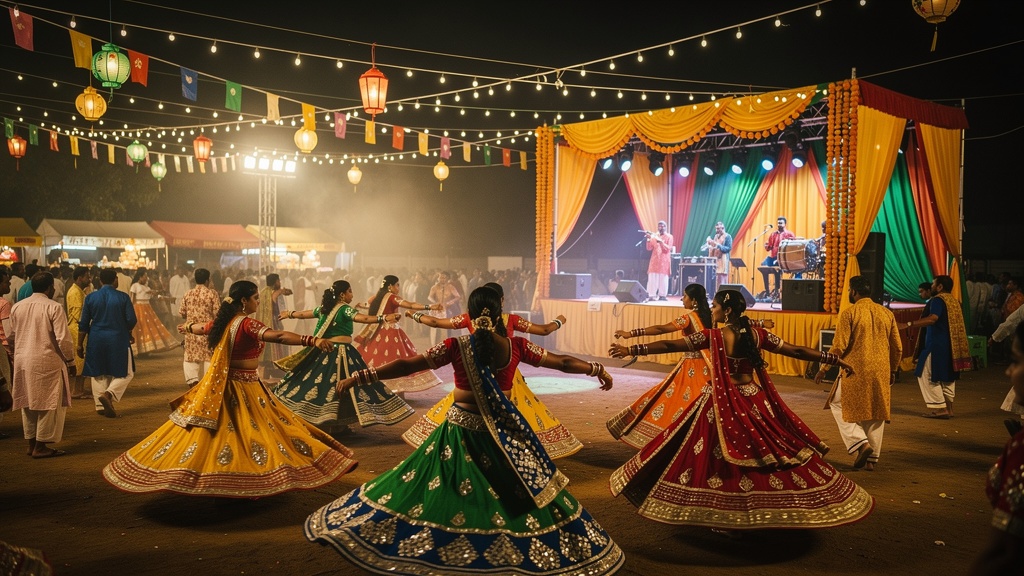
The Garba dance, the defining activity of Navratri in Gujarat, is performed in concentric circles around a central lamp or sacred image of the goddess. The circular movement represents the cycle of creation and the dance of the universe around the divine axis. Participants range in age from small children to the elderly, and the social inclusiveness of Garba — which brings together people across caste, class, and professional divisions — is one of its most remarkable features.
In Sanand, Navratri is celebrated in multiple locations simultaneously: the main grounds near the Amba Mata Temple host the largest official event, while numerous neighbourhood associations (mandals) organise their own Garba celebrations in local streets and grounds. Each location has its own atmosphere, ranging from the highly organised competitive Garba of the main event (where prizes are awarded for costume and dance quality) to the more intimate community events in residential areas where participation is entirely spontaneous.
Visitors are generally welcome to observe and, in many cases, participate in Navratri celebrations, though traditional dress is strongly encouraged and highly appreciated. Wearing a kurta-pyjama or dhoti for men and a saree or chaniya choli for women instantly signals respect for the tradition and typically elicits warm invitations to join the dance.
Uttarayan (Makar Sankranti) — The Kite Festival
On January 14 each year, Sanand participates in what is perhaps Gujarat's most joyful and visually spectacular festival: Uttarayan. The festival marks the solar transition into Capricorn (Makar) and the beginning of the sun's northward journey, and in Gujarat it is celebrated with kite-flying competitions that fill every rooftop and open space from before dawn to after dark.
The kite-fighting competitions are a unique blend of skill, strategy, and social bonding. Participants coat their kite strings (manja) with abrasive preparations to enable the cutting of opponents' strings — a practice that requires years of experience to master. The cry of "Kai Po Che!" (I have cut it!) celebrates each successful cut and echoes across the town throughout the day.
The food associated with Uttarayan is as important as the kite-flying itself. Til (sesame) and jaggery preparations — particularly tal-sankari (sesame-jaggery brittle) and chikkis — are exchanged among neighbours and consumed throughout the day. Undhiyu, the classic Gujarati winter casserole prepared underground, is traditionally served on Uttarayan as part of the daylong outdoor feast.
Diwali and Bestu Varas
The festival of Diwali in Sanand carries the additional significance of the Gujarati New Year (Bestu Varas) that follows the day after. This two-day celebration is the most significant commercial and social event of the Gujarat year: merchants perform chopda puja (worship of account books) to inaugurate the new financial year, families exchange sweets and dry fruits with elaborate ceremony, and the town is illuminated by thousands of oil lamps and fireworks.
The business community of Sanand takes Bestu Varas particularly seriously. Industrial units, shops, and businesses conduct formal religious ceremonies on this day, blessing their premises, machinery, and account books. The sight of garland-decorated factory gates and trucks decorated with marigolds reflects the integration of spiritual life with economic activity that is so characteristic of the Gujarati business culture.
Holi — The Festival of Colours
Holi in Sanand, as across Gujarat, is an exuberant celebration of spring's arrival and the mythological triumph of devotion over arrogance. The festival spans two days: the evening bonfire of Holika Dahan (which symbolically destroys evil) and the morning of Rangwali Holi, when participants drench each other with coloured powder and water.
The local tradition of Holi in Sanand incorporates bhang (cannabis-infused beverages) among adults in some communities, a practice with ancient Shaivite roots, and the singing of traditional spring songs (phag) that have been passed down through generations. The energy of Holi morning — when all social hierarchies dissolve in the egalitarian chaos of colours — is one of the most liberating and joyful experiences that India offers.
Rath Yatra and Other Religious Processions
Throughout the year, Sanand witnesses various religious processions that temporarily transform its streets into ceremonial spaces. The Rath Yatra (chariot procession) celebrating Lord Jagannath is observed in June–July, though at a smaller scale than the famous procession in Puri or Ahmedabad. Local temple processions on auspicious occasions, decorated floats carrying deity images through the streets accompanied by music and chanting, are a regular feature of Sanand's religious calendar.